Happy New Year 2026 is here, I hope you have all had a good break over the festive holidays and raring to go for the year ahead.
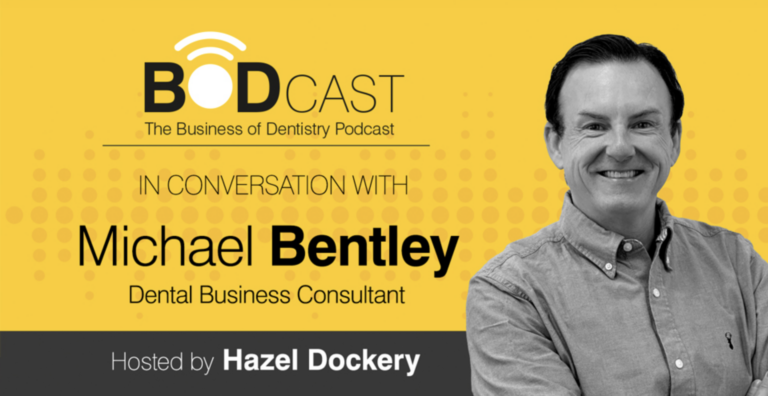
Before the end of 2025 I sat down with the wonderful Hazel Dockery from Practice Plan to record a Bodcast about Treatment Coordination. Hazel has done a complimentary blog post about the Bodcast which I wanted to share with you all and you can follow the link for our 20 minute session.
Enjoy this blog and the Bodcast and if you have any questions about TCO you can leave me a message on my contact page.
Michael
During a recent Practice Plan Bodcast, renowned Dental Business Coach, Michael Bentley, explained how employing a Treatment Coordinator (TCO) can benefit a practice.
If you’ve ever wondered whether a Treatment Coordinator (TCO) is worth the investment, the short answer is yes, absolutely. In fact, for private and mixed practices, having a TCO can transform the patient experience and boost your bottom line.
What does a Treatment Coordinator do?
First things first: a TCO is not a salesperson. Their role is rooted in patient care and communication. They are there to make sure patients fully understand their treatment options, feel comfortable asking questions and can make informed decisions without pressure.
Think of a TCO as a translator. Dentistry can be complex and patients often leave the surgery confused or overwhelmed. A TCO bridges that gap by explaining treatment plans in plain language, answering questions in a calm setting and ensuring consent is valid and informed. This isn’t just good practice as it aligns with GDC standards and GDPR requirements.
Why is this role so valuable?
Patients process information differently. Some want every detail, others prefer a quick summary, and many are dealing with emotions like fear, embarrassment or financial stress. Dentists rarely have the time to unpack all of this during a busy clinical day. A TCO does have that time.
By spending one-to-one time with patients, a TCO builds trust and confidence. They can discuss treatment stages, payment options and membership plans in a way that feels supportive rather than rushed. This extra time often leads to higher treatment acceptance rates because patients feel informed and reassured.
The business case for a TCO
Quite often, when patients leave the surgery, they forget details. They get to reception and default to “I’ll think about it.” Without follow-up, those treatment plans often sit on a shelf doing nothing. A TCO changes that. They keep the conversation going, answer questions and help patients commit to the next step. If they need more time to think about things, then, rather than leaving it to the patient to get back in touch (which rarely happens) a TCO can follow up and handle any additional queries the patient may have.
Practices that employ TCOs consistently report better conversion rates. This is because patients have the time and space to make decisions. They’re not hurried and they’re not left wondering about costs or options. That clarity translates into booked treatments and healthier revenue streams.
Who makes a great TCO?
The best TCOs are brilliant communicators. They can adapt to any personality, whether the patient wants detailed explanations or a quick overview. They’re empathetic, patient and able to manage emotions (both theirs and the patient’s). Clinical knowledge helps but it’s not the main requirement. Communication is the heart of the role.
Many TCOs start as dental nurses, receptionists or treatment advisors. What matters most is their ability to build trust and maintain strong relationships with both patients and clinicians. They become the “middle person” between the clinical team and the patient, ensuring everyone is on the same page.
Does the role lead to career progression?
For some, yes. Being a TCO can be a stepping stone to practice management, but it’s not automatic. Management requires a different skill set including leadership, HR and business strategy. That said, the communication skills developed as a TCO are invaluable in any leadership role.
What if you don’t have a TCO?
You may be missing out on two things: a better patient experience and higher treatment uptake. Without a TCO, patients often leave without booking because they feel uncertain or overwhelmed. A TCO can break down treatment into stages, explain finance options and make the process feel achievable.
Training matters
One final point: don’t just employ a TCO and hope for the best. Proper training is essential, not only for the TCO but for the whole team. Everyone needs to understand the role and how it fits into the patient journey. Clinicians need to understand what a TCO can do for them. When implemented well, treatment coordination becomes a seamless part of your practice culture.
If you’re a private or mixed practice, investing in a TCO isn’t just a nice-to-have, it’s a smart business move. Done properly, it improves patient satisfaction, boosts conversion rates and strengthens your brand. In short, it pays for itself.

Author – Hazel Dockery from Practice Plan 5th January 2026